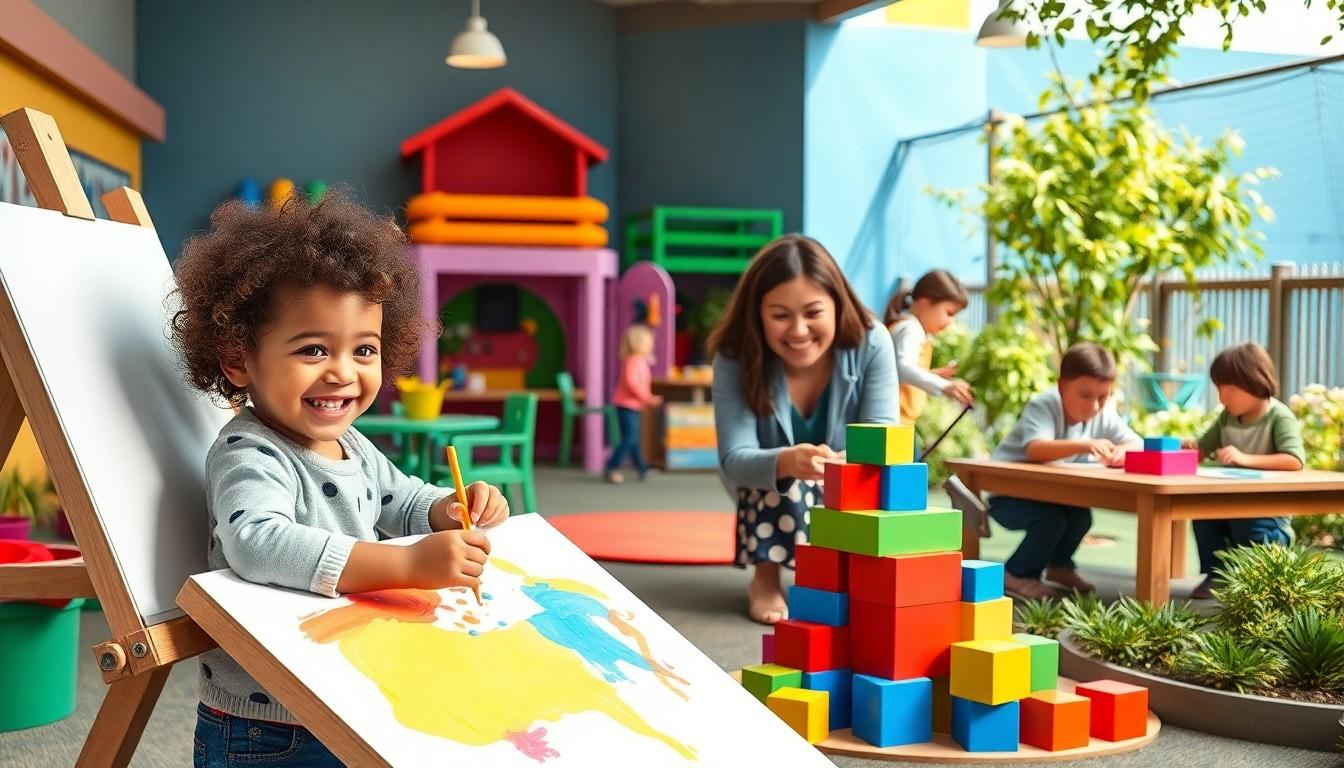
Watching little minds blossom into brilliant learners is truly magical, and that’s exactly what happens at an early learning village. These innovative educational spaces transform traditional daycare centers into dynamic learning environments where toddlers and young children thrive through play-based discovery.
Think of an early learning village as a miniature community designed specifically for young explorers. It’s where finger painting becomes a lesson in color theory and building blocks lay the foundation for future engineering skills. With specialized areas for art, music, movement and imaginative play these villages create the perfect ecosystem for early childhood development – all while making learning feel like one big adventure.
What Is an Early Learning Village?
An early learning village creates an immersive educational environment designed specifically for children from infancy through pre-kindergarten. This specialized campus integrates indoor classrooms with outdoor learning spaces to foster holistic development.
Key Features and Components
Early learning villages incorporate distinct zones that support different aspects of child development:
- Learning Studios equipped with age-appropriate materials for hands-on exploration
- Indoor Movement Areas featuring climbing equipment padded surfaces for gross motor activities
- Creative Spaces dedicated to art music drama sensory play
- Discovery Gardens with natural elements like sand water plant life
- Social Hubs where children gather for group activities story time meals
- STEAM Labs containing tools materials for science technology engineering art math experiences
Age-Appropriate Learning Spaces
Each area within an early learning village adapts to children’s developmental stages:
- Infant Spaces: Soft tactile environments with minimal stimulation padded surfaces mirrors
- Toddler Zones: Open areas for crawling walking climbing with safety features
- Preschool Centers: Interactive stations for dramatic play building blocks reading corners
- Pre-K Environments: Project spaces collaborative workstations writing centers
- Outdoor Classrooms: Nature-based learning areas gardens playgrounds water features
The spaces transition smoothly between age groups allowing children to progress naturally through developmental stages while maintaining familiarity with their surroundings.
Benefits of Early Learning Villages

Early learning villages offer distinct advantages over traditional childcare settings through their comprehensive approach to early childhood education. These purpose-built environments maximize learning potential through specialized spaces and integrated programming.
Social Development Opportunities
Early learning villages create multiple touchpoints for social interaction throughout the day. Children engage with peers across different age groups in designated social hubs like shared play areas community gardens. The village layout encourages spontaneous interactions during transitions between activities such as moving from art studios to outdoor spaces. Multi-age groupings enable younger children to learn from older peers while older children develop leadership empathy through mentoring roles. Structured activities in common areas promote collaboration problem-solving skills through:
- Group projects in maker spaces
- Team games in movement zones
- Shared mealtimes in dining areas
- Community celebrations in gathering spaces
- Mixed-age reading circles in literacy nooks
Integrated Learning Experience
Learning villages seamlessly blend different educational elements into a cohesive experience. Children move naturally between indoor classrooms outdoor exploration zones while engaging with connected concepts across multiple spaces. The village design incorporates:
- Math concepts in garden planning activities
- Scientific observation in nature zones
- Literacy development in storytelling areas
- Art expression in dedicated studios
- Technology integration in STEAM labs
- Physical development in movement zones
Each space reinforces learning from other areas creating natural connections between subjects. This integrated approach helps children grasp complex concepts through hands-on experiences across various learning environments enhancing knowledge retention cognitive development.
Educational Philosophy and Curriculum
Early learning villages embrace a comprehensive educational philosophy centered on child-directed discovery learning. The curriculum integrates developmental milestones with engaging activities that promote cognitive social emotional growth.
Play-Based Learning Approach
Play-based learning forms the foundation of early learning village education through structured exploration activities. Children engage in self-directed play within carefully designed environments featuring manipulative materials blocks dramatic play areas sensory tables art stations. Teachers act as facilitators guiding discovery through open-ended questions encouraging problem-solving creating opportunities for collaborative play. This approach incorporates:
- Guided exploration stations with rotating materials based on monthly themes
- Child-led project work that follows individual interests
- Social dramatic play zones equipped with props costumes stage areas
- Construction areas featuring blocks loose parts engineering materials
- Creative expression through art music movement activities
Multi-Sensory Development
Multi-sensory learning activities engage children through sight sound touch taste smell simultaneously enhancing neural connections. The curriculum includes:
- Tactile experiences with varied textures materials natural elements
- Musical instruments rhythm movement activities for auditory development
- Visual arts projects incorporating colors shapes patterns designs
- Sensory tables filled with sand water beans rice offering exploration
- Nature-based learning in outdoor gardens growing tasting vegetables herbs
- Cooking projects mixing measuring pouring experiencing ingredients
Each sensory activity connects to specific developmental objectives targeting fine motor skills language acquisition cognitive processing social interaction. Teachers document children’s engagement with materials to track progress across multiple domains of development.
Creating Safe and Nurturing Environments
Early learning villages prioritize safety protocols while maintaining engaging educational spaces. These environments incorporate specialized design elements that support both security and learning objectives.
Health and Safety Measures
Safety gates secure each learning zone entrance with fingerprint recognition systems for authorized access. Temperature monitoring stations at entry points screen children daily for optimal health maintenance. Air purification systems maintain indoor air quality through HEPA filtration processes. Antimicrobial surfaces in high-touch areas reduce germ transmission between children. Security cameras monitor all spaces while maintaining privacy in restroom areas. Emergency response protocols include direct connections to local first responders. Staff members receive quarterly safety training updates covering CPR certification medical emergency procedures infection control methods.
Child-Friendly Design Elements
Round corners on furniture pieces eliminate sharp edges in play areas. Low windows allow natural light while providing children views of outdoor spaces. Storage units sit at child height enabling independent access to learning materials. Color coded zones help children navigate different activity areas independently. Soft flooring materials cushion falls in active play spaces. Child sized fixtures in bathrooms promote self care skills development. Sound absorbing materials reduce noise levels creating calm learning environments. Mobile furniture pieces allow teachers to reconfigure spaces based on daily activities. Natural materials like wood bamboo create warm welcoming atmospheres.
Community and Family Engagement
Early learning villages foster strong connections between families, educators, and children through collaborative partnerships. These educational communities create multiple touchpoints for parent participation while building lasting relationships that support child development.
Parent Involvement Programs
Parents engage in their child’s learning journey through structured programs at early learning villages. Monthly parent-teacher conferences provide detailed progress updates with documented learning portfolios. Interactive workshops teach parents effective at-home learning strategies aligned with classroom curriculum. Parents participate in classroom activities like story time reading sessions family art projects. The Parent Advisory Committee influences program decisions through regular meetings with administrators. Digital communication platforms send real-time updates about daily activities milestones achievements. Parent resource centers offer educational materials books activity ideas for extending learning at home.
Building Strong Relationships
Teachers establish meaningful connections with families through daily communication about their child’s experiences. Morning greeting rituals welcome each family by name while afternoon pickup includes personalized activity summaries. Regular family events like seasonal celebrations cultural festivals create opportunities for community bonding. Teachers share weekly documentation of children’s projects learning moments through secure digital portfolios. Monthly coffee chats enable casual conversations between parents educators about child development topics. Mentorship programs pair experienced families with newcomers to strengthen community support networks. Family volunteer opportunities in classrooms special events deepen engagement within the learning community.
Conclusion
Early learning villages represent the future of early childhood education by creating dynamic environments where children can thrive. These innovative spaces blend purposeful design with research-backed educational approaches to support young learners’ development across all domains.
The thoughtful integration of specialized learning zones indoor and outdoor spaces and safety features creates an optimal environment for children to explore discover and grow. Through community engagement and family partnerships these educational hubs foster a supportive network that enhances each child’s learning journey.
As more families seek quality early education options early learning villages stand out as comprehensive solutions that prioritize both academic and social-emotional development while maintaining the joy of childhood discovery.